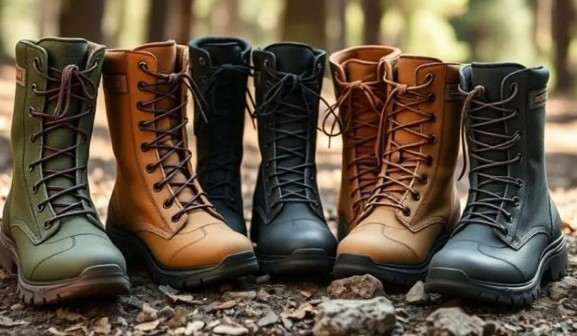
In professional sectors where operational success is measured by the split-second response, the “unisex” equipment standard of the past is being rapidly dismantled. For women in the military, law enforcement, and emergency services, a boot is not merely a uniform requirement; it is a specialized piece of load-bearing equipment. The emergence of women’s military boots is a direct response to the physiological reality that a woman’s foot is not simply a smaller version of a man’s.
By utilizing gender-specific lasts (the structural mold of the boot), manufacturers like Bates and LOWA now provide a narrower heel cup, a higher arch, and a more anatomical toe box. These adjustments are critical for preventing “heel slip” and “toe jam”—common failures in unisex boots that lead to debilitating blisters, plantar fasciitis, and long-term joint fatigue. In 2026, the standard for the female professional is a boot that integrates the agility of a high-end trail runner with the uncompromising protection of an industrial-grade combat boot.
The Anatomy of the Female Last: Why Fit Equals Safety
Standard military boots are often too wide in the heel and instep for the average female foot. When the foot “hunts” for stability inside a loose boot, it creates friction and compromises the wearer’s balance.
- Heel Lockdown: Women’s specific boots feature a tighter “heel-to-ball” ratio. This keeps the heel locked in place during high-intensity sprints or when descending steep, muddy terrain, significantly reducing the risk of ankle rolls.
- Arch Kinematics: Because women generally have higher, more flexible arches, these boots include enhanced medial support. This prevents the arch from collapsing under the weight of a heavy rucksack or duty belt, preserving energy for the final hours of a shift.
- Proportional Cushioning: Recognizing that women often have a different “strike pattern” and overall body mass compared to men, the midsoles are engineered with softer, more responsive PU or EVA foams to provide superior shock absorption without the excessive bulk of men’s platforms.
Performance Features of the 2026 Women’s Collection
The inventory at BootsPlusMore highlights the convergence of multi-terrain durability and modern convenience.
| Model / Feature | Professional Advantage |
| Bates GX-8 GORE-TEX® | Provides a 100% waterproof/breathable barrier, essential for wet-weather patrols and amphibious operations. |
| Side-Zip Technology | Found in the Ultra-Lite Tactical Sport series; allows for rapid donning and doffing while maintaining a secure, laced fit. |
| Composite Toe Protection | Non-metallic and “airport-friendly,” providing ASTM-rated impact protection without conducting cold or triggering metal detectors. |
| Moisture-Wicking Liners | Integrated into the Rush Mid series to manage the micro-climate of the foot during high-activity deployments in hot zones. |
Choosing the Right Profile: Tall vs. Mid
The choice between an 8-inch “Tall” boot and a 5-inch or 6-inch “Mid” boot depends entirely on the mission profile:
- The 8-Inch Standard: Required for most military OCP (Operational Camouflage Pattern) uniforms. These provide the maximum ankle stability for “yomps” over uneven terrain and offer additional protection against brush, insects, and hazardous debris.
- The Mid-Cut Hybrid: Preferred by patrol officers and private security who prioritize speed and weight. These boots offer greater range of motion for the ankle, making them ideal for high-speed vehicle transitions and urban foot pursuits.
Maintenance: Preserving Your Operational Assets
Because modern tactical boots often utilize a combination of full-grain leather and high-denier Cordura® nylon, they require a two-part maintenance routine:
- Textile Care: Use a soft brush and mild soap to remove dirt from the nylon sections. If these fibers become “clogged” with mud, the breathability of the boot is compromised.
- Leather Conditioning: For leather components, use a water-based conditioner. Avoid heavy oils that can soften the leather too much, as this can cause the boot to lose the lateral support necessary for ankle protection.
- The “Air Out” Rule: Never store damp boots in a locker or gym bag. Allow them to air dry at room temperature to prevent the growth of bacteria and the breakdown of internal adhesives.
The Foundation of the Modern Operator
As the demographic of the global security force continues to diversify, the equipment must keep pace. A boot that fails to support the specific anatomy of the wearer is more than a discomfort—it is a liability. By prioritizing boots built on a female-specific last, professionals ensure that their focus remains on the mission, not their feet.
Whether you are navigating the rigorous training of the jump school or the daily demands of a municipal patrol, your foundation must be unshakable. For a curated selection of the industry’s most reliable female-specific footwear—ranging from the iconic Bates series to the high-performance LOWA platforms—trust the experts at BootsPlusMore. Their veterans-led insight into the needs of the modern operator ensures that you are equipped with gear that respects both your anatomy and your service.